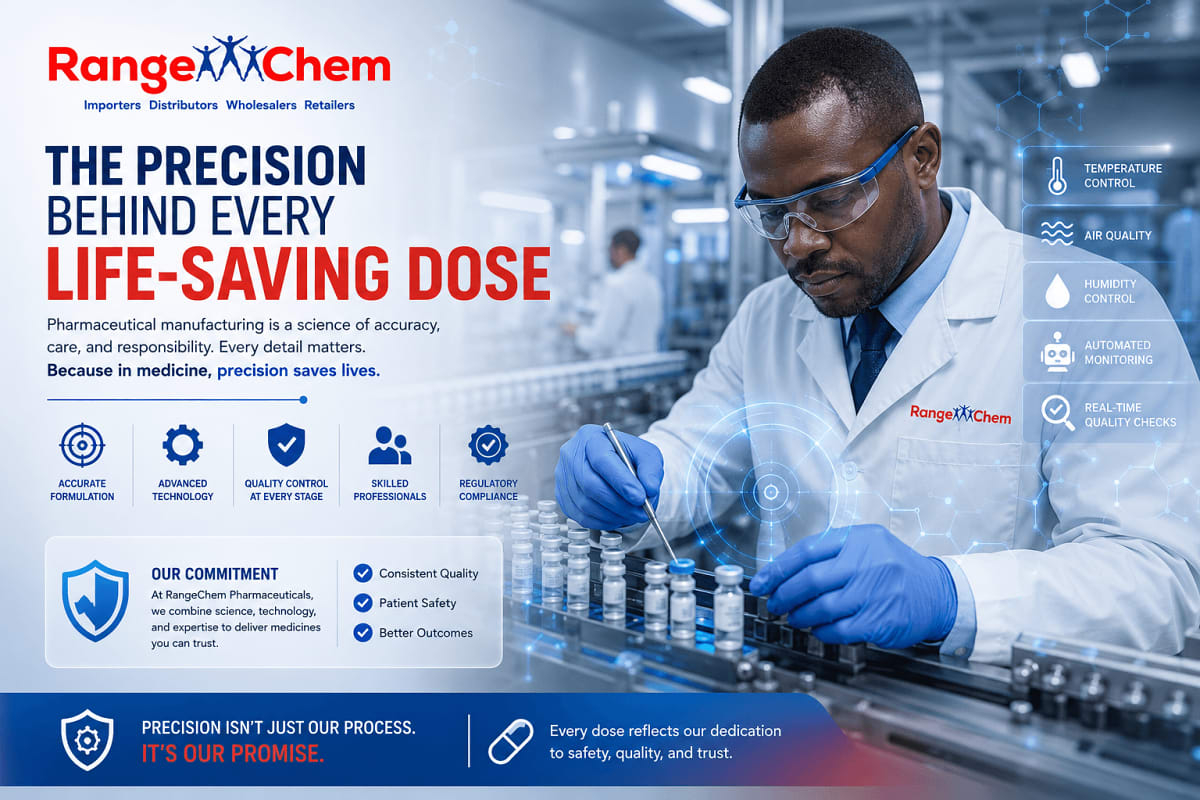
1. The Science of Accuracy
Every medicine is formulated with exact quantities of active ingredients and excipients.
Even a slight variation can lead to:
- Reduced effectiveness
- Increased risk of side effects
- Potential toxicity
Precision ensures that each dose delivers the exact therapeutic benefit intended for the patient.
2. Controlled Manufacturing Environments
Pharmaceutical production takes place in tightly controlled environments.
Factors such as:
- Temperature
- Humidity
- Air quality
- Pressure
are constantly monitored to prevent contamination and maintain consistency.
Regulatory authorities like the Food and Drug Administration enforce strict guidelines to ensure these environments meet global safety standards.
3. Advanced Technology and Automation
Modern pharmaceutical manufacturing relies on advanced equipment and automation systems.
These technologies help:
- Minimize human error
- Ensure consistent production
- Improve accuracy in measurement and mixing
Automation also allows for real-time monitoring, ensuring that any deviation is detected and corrected immediately.
4. Quality Control at Every Stage
Precision is maintained through continuous testing and validation.
Key quality checks include:
- Raw material testing
- In-process monitoring
- Final product verification
This ensures that every batch meets strict safety and efficacy standards before reaching patients.
5. The Role of Skilled Professionals
While machines provide accuracy, skilled professionals ensure oversight.
Pharmacists, chemists, and engineers work together to:
- Monitor processes
- Validate results
- Maintain compliance
Their expertise ensures that every step of manufacturing meets the highest standards.
6. The Cost of Errors
In pharmaceutical manufacturing, errors are not just costly—they are dangerous.
A single mistake can lead to:
- Product recalls
- Regulatory action
- Patient harm
This is why precision is treated as a non-negotiable requirement rather than an optional goal.
7. Precision Through Design
Modern approaches like Quality by Design focus on building precision into every stage of development.
Instead of relying solely on final testing, manufacturers design processes that prevent errors before they occur.
This ensures consistent quality and reliable outcomes.
Conclusion
Precision in pharmaceutical manufacturing is not just about making medicines—it is about ensuring that every dose is safe, effective, and trustworthy.
Patients may never see the complexity behind their medication, but they depend on it every day.
In this field, precision doesn’t just improve products—it saves lives.