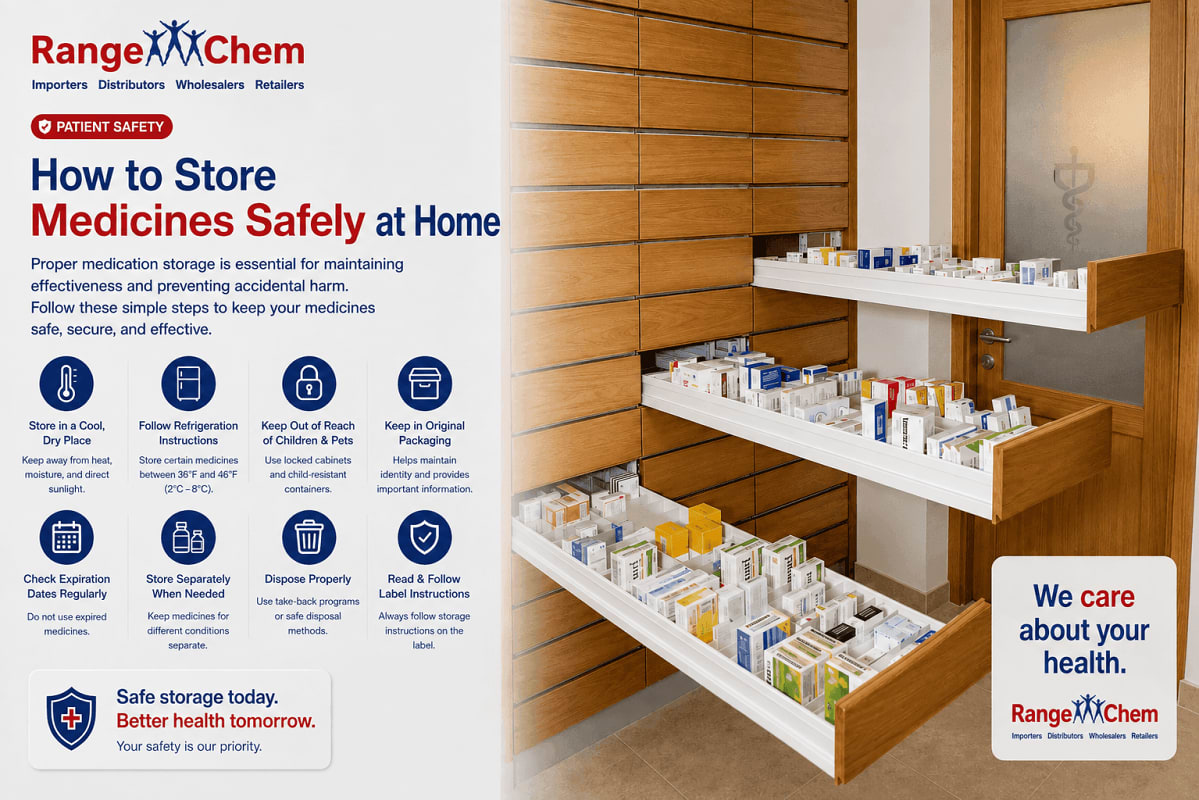
Patient Safety: How to Store Medicines Safely at Home
Proper medication storage is a critical part of patient safety. When medicines are stored incorrectly, they can lose effectiveness, become unsafe, or pose serious risks—especially to children, pets, and elderly family members. Understanding how to store medicines properly at home helps ensure they work as intended and reduces the risk of accidental harm.
Why Safe Medication Storage Matters
Medications are sensitive products. Exposure to heat, moisture, light, or improper handling can cause them to degrade. In some cases, unsafe storage can lead to:
- Reduced drug effectiveness
- Accidental poisoning
- Mixing up medications or incorrect dosing
- Increased risk of misuse or abuse
By following a few simple guidelines, patients can protect their health and the health of those around them.
Store Medicines in a Cool, Dry Place
Most medications should be stored at room temperature, away from excessive heat and moisture. Bathrooms and kitchens are common storage locations, but they are often poor choices due to humidity and temperature changes.
Best practices include:
- Store medicines in a dry cabinet or drawer
- Keep them away from sinks, stoves, and windows
- Avoid storing medications in cars, where temperatures can fluctuate dramatically
Always check the label for specific temperature requirements.
Follow Refrigeration Instructions Carefully
Some medicines—such as insulin, certain eye drops, and biologics—require refrigeration.
When refrigerating medications:
- Store them between 36°F and 46°F (2°C–8°C), unless otherwise directed
- Do not freeze unless the label specifically allows it
- Keep medicines in their original containers to avoid mix-ups
- Place them away from food to prevent contamination
Keep Medicines Out of Reach of Children and Pets
Accidental ingestion is one of the most common medication-related emergencies.
To prevent this:
- Store medicines in locked cabinets or containers
- Use child-resistant caps, but never rely on them alone
- Avoid leaving medicines on countertops, bedside tables, or purses
- Educate children that medicine is not candy
Keep Medicines in Their Original Packaging
Original packaging provides important information, including:
- Dosage instructions
- Expiration dates
- Storage requirements
- Drug identification
Avoid transferring medications into unmarked containers unless advised by a healthcare professional.
Pay Attention to Expiration Dates
Expired medicines may be ineffective or unsafe.
Safety tips:
- Regularly check expiration dates
- Do not use medications past their expiration unless directed by a pharmacist
- Dispose of expired medicines properly through take-back programs or pharmacy guidance
Store Medications Separately When Needed
Some medications look similar or have different dosing instructions.
To reduce errors:
- Separate medications for different family members
- Keep internal and topical medications apart
- Store high-risk medications (such as opioids) in a secured location
Properly Dispose of Unused or Expired Medications
Never flush medications down the toilet unless specifically instructed.
Safe disposal options include:
- Local pharmacy take-back programs
- Community drug take-back events
- FDA-approved disposal methods for home use
Proper disposal helps protect others and prevents environmental contamination.
Final Thoughts
Safe medication storage is a simple but powerful way to protect patient health. By storing medicines correctly, following label instructions, and keeping them secure, patients can reduce risks and ensure their treatments remain effective.
If you have questions about how to store a specific medication, consult your pharmacist or healthcare provider for guidance.