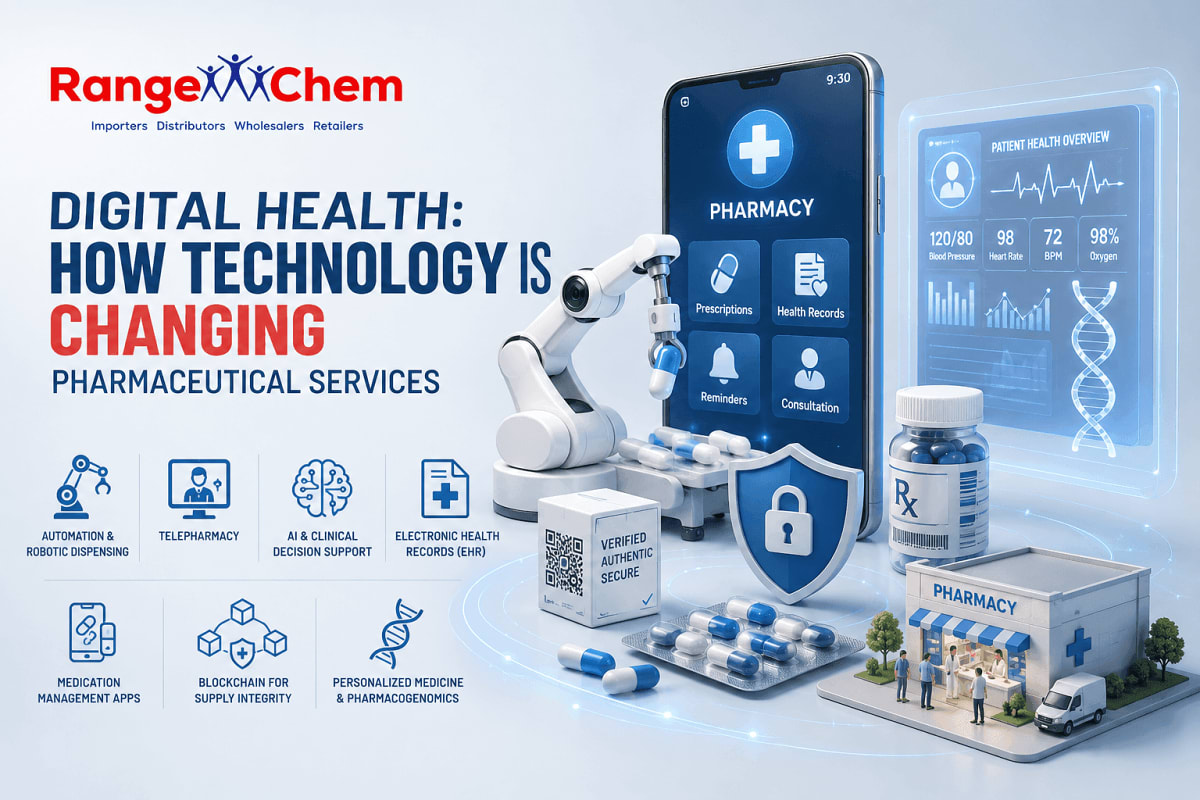
Digital Health: How Technology Is Changing Pharmaceutical Services
The traditional image of a pharmacy—a quiet counter where a pharmacist counts pills by hand and hands over a typed leaflet—is rapidly becoming a relic of the past. Today, the pharmaceutical landscape is undergoing a profound transformation driven by digital innovation.
For decades, the role of the pharmacist was transactional. Now, technology is enabling a shift toward transformational care. From artificial intelligence to telepharmacy, these advancements are not just changing how we dispense medication, but how we interact with patients and improve health outcomes.
Here is a look at the key technologies reshaping pharmaceutical services as we know them.
1. Automation and Robotic Dispensing
One of the most visible changes in the modern pharmacy is the rise of automation. Robotic dispensing systems are no longer confined to hospital pharmacies; they are entering community practice.
- Efficiency and Safety: Automated counting machines reduce the risk of human error in the dispensing process. By handling the repetitive task of counting and labeling, robots free up pharmacists to focus on what they were trained to do: clinical consultation.
- Inventory Management: Smart shelves and automated inventory systems track stock in real-time. They can predict when a chronic medication is running low and automatically flag expiring products, ensuring patients never face a lapse in therapy.
The Impact: Reduced wait times for patients and a significant decrease in dispensing errors.
2. Telepharmacy: Breaking Down Geographic Barriers
Access to healthcare professionals has always been a challenge for rural or homebound patients. Telepharmacy bridges that gap.
- Remote Consultations: Patients can now video-call their pharmacist for medication counseling, post-discharge follow-ups, or to discuss minor ailments without traveling to the store.
- Remote Verification: In hospital settings, pharmacists can verify prescriptions and supervise dispensing technicians from a central location, serving multiple remote sites. This ensures that even understaffed rural hospitals have access to a pharmacist's clinical oversight.
The Impact: Expanded access to pharmaceutical expertise and improved continuity of care.
3. Artificial Intelligence (AI) and Clinical Decision Support
AI is moving beyond the tech world and into the heart of clinical pharmacy. Modern software doesn't just process prescriptions; it analyzes them.
- Drug Interaction Checks: Advanced algorithms can cross-reference a new prescription against a patient's full medical history, genetics, and other medications in seconds, flagging potential adverse reactions that a human might miss.
- Predictive Analytics: AI can analyze patient data to predict who is at risk of non-adherence. For example, if a patient regularly picks up their blood pressure medication late, the system can flag this to the pharmacist, prompting a proactive check-in call.
The Impact: A shift from reactive dispensing to proactive, preventative patient management.
4. Electronic Health Records (EHR) and Interoperability
For years, pharmacy operated in a silo. Your doctor knew your diagnosis, and your pharmacist knew your medications, but the two rarely connected seamlessly. Technology is finally breaking down these walls.
- Shared Records: Integrated EHR systems allow pharmacists (with patient consent) to view lab results and diagnoses. This transforms the consultation. Instead of just asking "Are you taking this?", the pharmacist can ask, "I see your HbA1c is elevated; let's discuss how we can optimize your diabetes management."
- Closed-Loop Referrals: GPs can now send electronic prescriptions directly to the pharmacy, and pharmacists can send medication reviews or adherence reports back to the GP, creating a collaborative care loop.
The Impact: A more holistic view of the patient and better collaboration within the primary care team.
5. Medication Management Apps and Smart Packaging
The "dumb" pill bottle is getting a digital upgrade. Technology is empowering patients to take control of their own health outside the pharmacy walls.
- Smart Pill Bottles: These devices track when the bottle is opened and send reminders to a patient's smartphone if a dose is missed. They can even notify a caregiver or family member.
- Adherence Apps: Pharmacy-backed apps now offer features like digital pill tracking, refill reminders, and educational content tailored to the patient's specific medication regimen.
The Impact: Tangible improvements in medication adherence, which is the single most important factor in managing chronic disease.
6. Blockchain for Supply Chain Integrity
Counterfeit medication is a global public health threat. Blockchain technology—the same system underpinning cryptocurrencies—is emerging as a powerful tool to combat this.
- End-to-End Traceability: Blockchain creates an immutable digital ledger for every transaction. A medication can be tracked from the manufacturer, through the wholesaler, to the pharmacy, and finally to the patient. Any tampering is immediately visible.
- Authentication: Patients and pharmacists can scan a QR code on the packaging to verify the medication's journey, ensuring what they are holding is authentic and has been stored correctly.
The Impact: Greater trust in the pharmaceutical supply chain and enhanced patient safety.
7. Personalized Medicine and Pharmacogenomics
Perhaps the most exciting frontier is the integration of genetics into pharmaceutical care. Technology has made genetic testing affordable and accessible.
- Tailored Therapy: Pharmacogenomic testing can reveal how a patient metabolizes certain drugs. For example, a simple cheek swab can tell a pharmacist whether a standard dose of a blood thinner or antidepressant will be effective, ineffective, or dangerous for that specific individual.
- Point-of-Care Testing: Portable devices are being developed that allow pharmacists to perform these genetic tests or rapid diagnostic tests (like sore throat swabs) in the pharmacy, allowing them to treat or refer based on hard data rather than just symptoms.
The Impact: Moving away from the "one-size-fits-all" model of prescribing toward truly individualized medicine.
The Future Pharmacist: A Digital Health Coach
As technology handles the logistics, the human element of pharmacy becomes more important than ever. The pharmacist of the future will not be hidden behind a bench counting pills. They will be visible, connected, and acting as a digital health coach.
They will interpret data from AI, explain genetic test results, and guide patients through the overwhelming number of health apps and devices.
At RangeChem Pharmaceuticals, we are committed to embracing these technologies not to replace the human touch, but to enhance it. By integrating digital innovation with compassionate care, we are building a pharmacy service that is safer, more accessible, and more effective for everyone.
Disclaimer: This blog is for informational purposes only. The availability of certain technologies and services may vary. Always consult with a healthcare professional for medical advice.