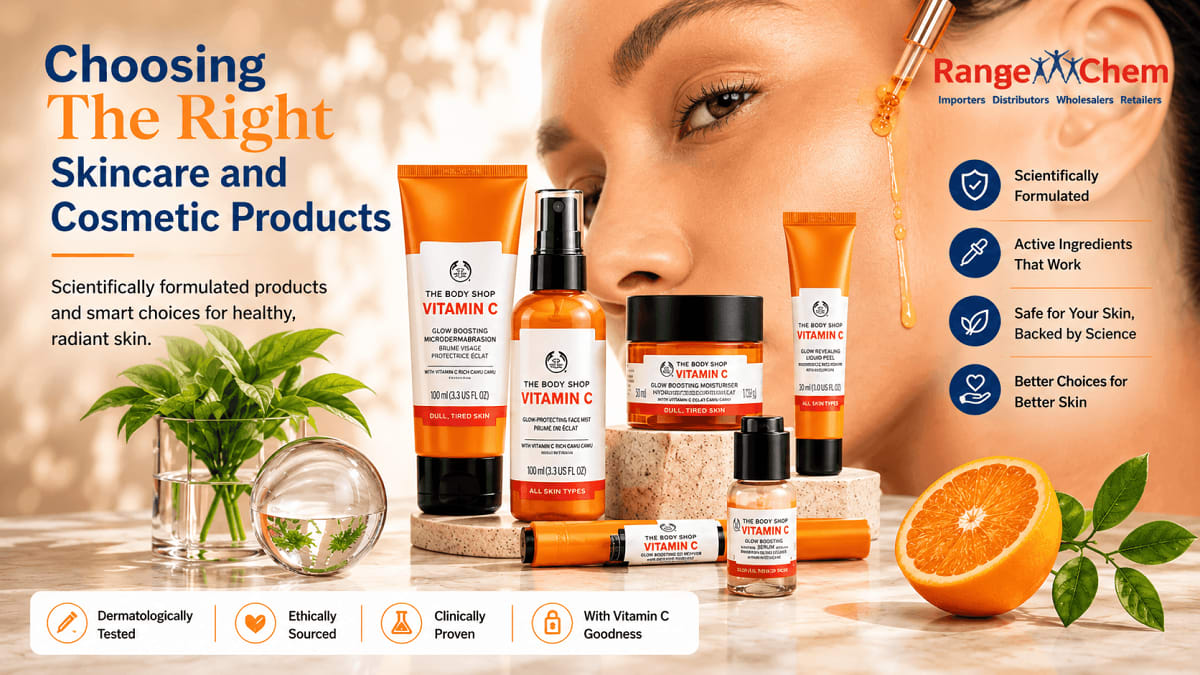
Wellness & Beauty: Choosing The Right Skincare and Cosmetic Products
In the modern pharmacy, the shelves are no longer just filled with treatments for illness. Skincare and cosmetics now occupy a central role in preventative health and therapeutic management. However, the line between evidence-based dermatology and clever marketing is often blurred.
As your trusted healthcare providers, we believe that choosing the right skincare and cosmetic products should be a clinical decision, not just an aesthetic one. Whether you are managing a chronic skin condition or simply seeking maintenance, here is a pharmaceutical perspective on how to navigate your regimen safely and effectively.
1. Assessing the Skin Barrier: The Foundation of Treatment
From a pharmacological standpoint, the skin is not just a surface; it is a complex organ responsible for protection and regulation. The outermost layer, the stratum corneum, acts as a barrier.
When selecting products, the first question should be: Is my barrier healthy or compromised?
- Compromised Barrier: If you experience stinging, redness, or flaking, the priority is repair. Look for formulations containing physiological lipids identical to those found in human skin, specifically Ceramides (1, 3, and 6-II) , cholesterol, and free fatty acids. These are essential for restoring the lamellar structure of the skin.
- Intact Barrier: If the skin is tolerant, you can introduce targeted active pharmaceutical ingredients (APIs) to treat specific concerns like hyperpigmentation or photoaging.
2. Decoding Active Ingredients: Efficacy and Concentration
In pharmaceuticals, we understand that the efficacy of a compound is dose-dependent. The same applies to cosmeceuticals. Here are key ingredients validated by clinical evidence:
- Retinoids (Vitamin A Derivatives): The gold standard for photoaging and acne. Over-the-counter options often contain Retinol or Retinaldehyde. These must be converted by the skin into Retinoic Acid. Advise patients to start with a low concentration (0.25% or 0.3%) to mitigate the "retinization" (irritation) period.
- Vitamin C (L-Ascorbic Acid): A potent antioxidant that neutralizes free radicals and inhibits melanin production. For stability and penetration, it must be formulated at a low pH (below 3.5). Concentrations between 10-20% are considered optimal.
- Niacinamide (Vitamin B3): A versatile agent supported by robust data for reducing sebum production, improving barrier function, and decreasing transepidermal water loss (TEWL). It is generally well-tolerated even in sensitive patients.
- Alpha Hydroxy Acids (AHAs): Glycolic Acid and Lactic Acid work by exfoliating the corneocytes. They are useful for textural irregularities but increase photosensitivity.
Clinical Note: Always remind patients that the introduction of any new active ingredient should be staggered. Introducing multiple actives simultaneously can lead to contact dermatitis, which often presents similarly to an allergic reaction.
3. The Excipients Matter: Vehicle and Delivery Systems
In pharmaceutics, the "vehicle" (the base of the cream or lotion) determines how the active ingredient is delivered. This is critical in product selection:
- Ointments: Highest occlusivity. Ideal for very dry skin or compromised barriers (e.g., petrolatum-based products) but may be too heavy for acne-prone patients.
- Creams (Oil-in-Water): Balanced formulation. Good for general use as they are cosmetically elegant while providing moisturization.
- Gels and Lotions: Higher water content. Suitable for oily skin and scalp applications but may contain alcohol, which can be drying.
The Pharmaceutical Perspective: A high-quality formulation ensures stability and bioavailability. A cheap product with the right percentage of an ingredient may still be ineffective if the delivery system fails to penetrate the stratum corneum.
4. Cosmetics and Compromised Skin: A Cautious Approach
For patients managing dermatological conditions such as rosacea, eczema, or acne vulgaris, cosmetic selection is a part of disease management.
- Non-Comedogenic Labelling: While not a regulated term, products labeled non-comedogenic are formulated to avoid ingredients known to block pores (e.g., isopropyl myristate, certain lanolins).
- Mineral Makeup: For post-procedure patients or those with extreme sensitivity, cosmetic products based on Titanium Dioxide and Zinc Oxide offer physical coverage while providing a physical sunscreen barrier. They are inert and less likely to cause immunological reactions compared to chemical-based foundations.
5. The Sunscreen Imperative
No skincare regimen is complete without photoprotection. From a clinical standpoint, the efficacy of every other product (especially retinoids and AHAs) is rendered useless if the skin is not protected from UV damage.
- Broad Spectrum: Ensure the product covers both UVB (burning) and UVA (aging) rays.
- SPF: SPF 30 blocks ~97% of UVB rays, while SPF 50 blocks ~98%. The difference is marginal, but reapplication is the key variable that drives actual efficacy.
- Formulation: For patients with sensitive skin or melasma, physical blockers (Zinc/Titanium) are often superior to chemical blockers (Oxybenzone, Avobenzone).
Summary: The Clinical Checklist
When advising customers or selecting products for yourself, consider this checklist:
- Diagnosis: What is the primary skin concern? (Acne, Dryness, Pigmentation)
- Tolerance: Is the skin barrier intact or inflamed?
- Ingredient Stability: Is the active ingredient packaged to prevent degradation (e.g., opaque pumps for Vitamin C)?
- Adherence: Will the patient use the product consistently based on its texture and feel?
Consult Your Pharmacist
Your pharmacist is trained to understand the pharmacokinetics of topical preparations. If you are unsure whether a new serum will interact with your prescribed topical medication, or if you are experiencing adverse reactions, we are here to help you navigate the intersection of beauty and health.
Disclaimer: This blog is for informational purposes only and does not constitute medical advice. Always consult with a healthcare professional or dermatologist before starting a new skincare regimen, especially if you are on prescription medications.